
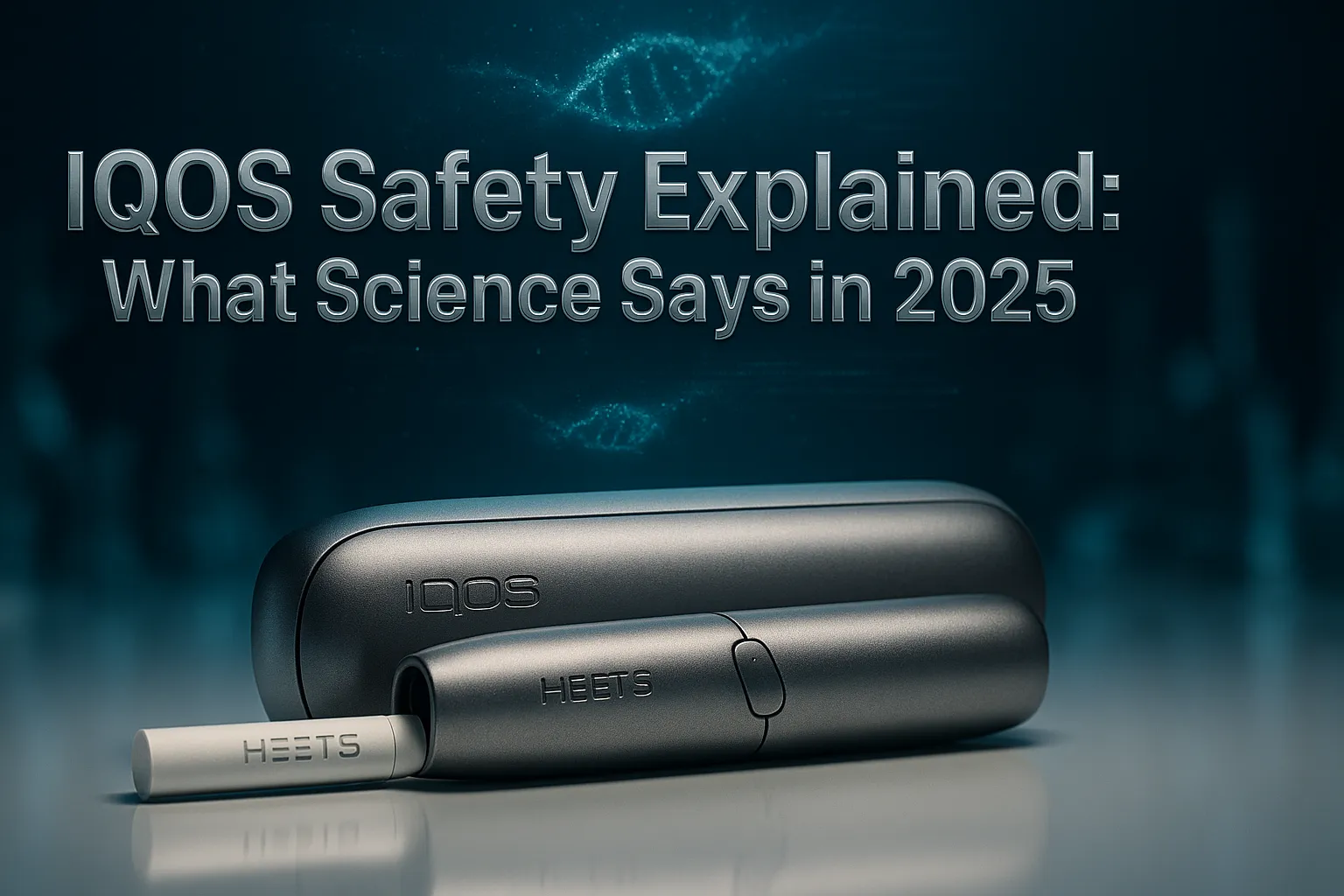
IQOS safety remains a critical question for smokers considering alternatives in 2025. In Current research IQOS reduces exposure to harmful chemicals by 90-95% compared to cigarettes, but reduced exposure does not equal safe. This article examines the latest scientific evidence, independent studies, and regulatory positions to give you a clear Idea what we know about IQOS safety today.
What is IQOS and How Does It Work?
We have a separate blog about this. Just for context, IQOS is a heated tobacco product that works differently from traditional cigarettes. Instead of burning tobacco at 800-900°C, IQOS heats tobacco to approximately 350°C. This lower temperature creates a nicotine-containing aerosol without combustion.
The absence of combustion is central to IQOS safety claims. When tobacco burns, it produces over 6,000 chemicals, including at least 100 known toxicants. Heating tobacco generates fewer of these harmful compounds. For explicit information, please click here.
IQOS Research 2025: What New Studies Show
Several important studies published between 2024 and early 2025 add to our understanding of IQOS safety. These studies examined both short-term exposure and longer-term health outcomes.
A 2024 Japanese cohort study followed 4,300 IQOS users over three years. Researchers measured lung function, cardiovascular markers, and respiratory symptoms. Results showed stable lung function in exclusive IQOS users, unlike the decline seen in continuing smokers. However, IQOS users showed slightly elevated inflammatory markers compared to non-users.
Independent research from Swiss universities in 2024 examined indoor air quality in homes where IQOS was used. The study found that IQOS produced 95% fewer harmful chemicals in indoor air compared to cigarette smoke. Particulate matter levels remained close to background levels.
A critical 2025 review published in Tobacco Control examined all available IQOS research. The authors noted that while biomarker data looks promising, the lack of 10-year plus studies means we cannot confirm reduced disease risk. The review emphasized the difference between chemical exposure reduction and actual health outcomes.
Chemical Emissions: The Numbers Behind IQOS Safety
Understanding IQOS safety requires looking at specific chemical reductions. The table below compares key harmful compounds between cigarette smoke and IQOS aerosol based on 2024 laboratory testing:
| Chemical Compound | Cigarette Smoke | IQOS Aerosol | Reduction % |
| Carbon Monoxide | 10-23 mg | 0.1-0.2 mg | 98-99% |
| Formaldehyde | 20-90 μg | 1-2 μg | 90-95% |
| Acetaldehyde | 400-1,400 μg | 10-20 μg | 95-98% |
| Benzene | 20-70 μg | 0.1-1 μg | 97-99% |
| Acrolein | 25-140 μg | 1-3 μg | 96-98% |
| Tobacco-Specific Nitrosamines | High | 90-95% lower | 90-95% |
These reductions are substantial. Carbon monoxide, which binds to hemoglobin and reduces oxygen delivery, drops by roughly 98%. Formaldehyde and acetaldehyde, both respiratory irritants and carcinogens, decrease by over 90%.
However, IQOS aerosol is not emission-free. Nicotine delivery remains similar to cigarettes, typically 0.5-1.5 mg per stick. The aerosol also contains glycerin, propylene glycol, and trace amounts of the same toxicants found in cigarette smoke, just at much lower levels.
Biomarker Studies: What Happens Inside the Body
Biomarkers are measurable indicators of biological processes or exposure to harmful substances. IQOS research 2025 includes several biomarker studies that help assess actual physiological impact.
A six-month clinical study compared three groups: cigarette smokers, IQOS users, and those who quit all tobacco. Blood and urine samples measured exposure biomarkers and biological effect markers.
Exposure biomarkers showed clear differences. IQOS users had 90-95% lower levels of harmful chemical metabolites compared to smokers. These levels moved closer to those of quitters but remained elevated compared to never-users.
Biological effect markers revealed more nuanced results. White blood cell counts normalized in IQOS users within three months. Oxidative stress markers improved significantly. However, some inflammatory markers remained elevated compared to complete quitters.
The study found that 8-epi-prostaglandin F2α, a marker of oxidative damage, dropped by 60% in IQOS users. This suggests meaningful reduction in cellular stress. Yet levels did not reach those of non-users, indicating continued biological impact.
Independent Research vs. Manufacturer-Funded Studies
Understanding who funds IQOS research matters for evaluating IQOS safety claims. Philip Morris International, which produces IQOS, has invested over one billion dollars in research. This funding raises questions about potential bias.
A 2024 systematic review examined research funding sources. Of 87 IQOS studies analyzed, 64% received full or partial PMI funding. Studies funded by PMI were significantly more likely to emphasize positive safety findings.
Independent research tells a more cautious story. Studies without tobacco industry funding consistently note reduced harm compared to smoking but emphasize remaining risks. These studies highlight gaps in long-term data and potential risks to non-smokers who take up IQOS.
The Japanese Ministry of Health commissioned independent research in 2024. Their findings confirmed reduced exposure to toxicants but raised concerns about nicotine addiction perpetuation. The report concluded IQOS may help smokers reduce harm but should not be promoted to non-smokers.
European researchers published findings in the BMJ showing that while IQOS reduces some risks, it may increase others. The heating process creates some unique compounds not found in cigarette smoke, though typically at lower levels than cigarette toxicants.
What Health Authorities Say About IQOS Safety
Regulatory positions on IQOS vary globally, reflecting different interpretations of available evidence.
The US FDA authorized IQOS as a modified risk tobacco product in 2020. This authorization allows PMI to market IQOS with specific reduced exposure claims. However, the FDA explicitly states this does not mean safe or FDA approved. The authorization was based on evidence that complete switching reduces exposure to harmful chemicals.
The World Health Organization maintains a skeptical position. WHO statements emphasize that all tobacco products are harmful. A 2024 WHO report acknowledged reduced emissions but warned against assuming reduced disease risk without long-term epidemiological data.
The UK government takes a harm reduction approach. Public Health England’s 2024 update noted that while not risk-free, heated tobacco products like IQOS are likely substantially less harmful than smoking. They estimate IQOS carries a fraction of smoking risk, possibly similar to or slightly higher than e-cigarettes.
Japanese health authorities approved IQOS for sale but prohibit reduced risk marketing without extensive clinical evidence. Japan has the highest IQOS usage globally, providing real-world data on population-level effects.
In the UAE, IQOS is legally available and regulated as a tobacco product. The UAE Ministry of Health recognizes it as an alternative to cigarettes but maintains the position that cessation of all tobacco and nicotine products remains the healthiest choice.
The Cardiovascular Question
Heart disease represents the leading cause of smoking-related death. Whether IQOS reduces cardiovascular risk remains a crucial safety question.
A 2024 study examined arterial stiffness in IQOS users, smokers, and non-users. Smokers showed significantly impaired endothelial function and increased arterial stiffness. IQOS users showed improvement compared to smokers but did not reach non-user levels.
Nicotine affects heart rate and blood pressure regardless of delivery method. IQOS delivers comparable nicotine to cigarettes, meaning acute cardiovascular effects from nicotine persist. The question becomes whether eliminating combustion products sufficiently reduces long-term cardiovascular risk.
Platelet aggregation studies show mixed results. Some research indicates IQOS causes less platelet activation than cigarettes. Other studies find minimal difference. Carbon monoxide reduction should theoretically benefit cardiovascular health, but long-term outcome studies do not yet exist.
The American Heart Association’s 2024 statement on heated tobacco noted insufficient evidence to conclude cardiovascular risk reduction. They emphasized that any nicotine-containing product poses cardiovascular risks, particularly for those with existing heart conditions.
IQOS Cancer Risk: What We Know and Don’t Know
Cigarette smoking causes about 30% of all cancer deaths. Most smoking-related cancers result from toxicants in tobacco smoke, not nicotine itself. This makes the IQOS safety question particularly relevant for cancer risk.
Laboratory studies show IQOS aerosol is less genotoxic than cigarette smoke. Genotoxicity tests measure DNA damage, a precursor to cancer. Multiple studies confirm 90-95% reduction in mutagenic activity.
Animal studies provide cautious optimism. Mice exposed to IQOS aerosol showed fewer pre-cancerous lung changes than those exposed to cigarette smoke. However, some cellular changes still occurred, and rodent studies do not perfectly predict human outcomes.
The cancer question requires 20-30 years of human data. Smoking typically causes lung cancer after decades of exposure. IQOS has existed since 2014, making comprehensive cancer data impossible in 2025.
Early epidemiological signals from Japan show promising trends. Population-level lung cancer rates have not increased despite widespread IQOS adoption. However, this data remains preliminary and requires cautious interpretation.
The International Agency for Research on Cancer has not classified IQOS specifically. They note that while reduced exposure to carcinogens suggests reduced cancer risk, this remains unproven without long-term population studies.
Respiratory Health Effects
Chronic obstructive pulmonary disease and other respiratory conditions represent major smoking harms. IQOS research 2025 includes several respiratory health studies.
A Korean study followed 1,200 IQOS users for two years, measuring lung function through spirometry. Results showed no significant decline in forced expiratory volume, unlike the progressive decline in continuing smokers. Former smokers who switched to IQOS maintained stable lung function.
However, respiratory symptom surveys tell a more complex story. Some IQOS users report throat irritation, cough, and mouth dryness. These symptoms occur less frequently than in smokers but more than in non-users.
A 2024 Swiss study examined airway inflammation using induced sputum samples. IQOS users showed reduced inflammatory cell counts compared to smokers. Levels of interleukin-8, an inflammatory marker, decreased significantly after switching from cigarettes to IQOS.
Asthma patients represent a vulnerable group. Limited research suggests IQOS triggers fewer asthma symptoms than cigarette smoke. One study found 70% reduction in asthma exacerbations when asthmatic smokers switched completely to IQOS. Despite this improvement, complete cessation remained the recommended approach.
IQOS and Cigarettes: The Dual Use Problem
Many people use IQOS alongside cigarettes rather than switching completely. This dual use pattern significantly affects IQOS safety outcomes.
Research consistently shows that health benefits require complete switching. Dual users show minimal improvement in biomarkers compared to exclusive smokers. One study found that smoking even five cigarettes daily while using IQOS negated most exposure reductions.
A 2024 survey of 5,000 IQOS users in Europe found that 40% continued smoking cigarettes. Dual users reported using IQOS in situations where smoking was inconvenient but maintained cigarette use for satisfaction.
The practical implication is clear: IQOS safety benefits depend entirely on complete substitution. Partial switching provides minimal harm reduction. This makes IQOS less effective as a harm reduction tool than initially hoped for many users.
What This Means for You
After examining the latest IQOS research 2025, several conclusions emerge about IQOS safety:
IQOS substantially reduces exposure to harmful chemicals compared to cigarettes. The 90-95% reduction in toxicants is consistent across multiple studies.
Reduced exposure appears to translate into reduced biological impact. Biomarker studies show meaningful improvements in inflammation, oxidative stress, and chemical exposure indicators.
However, IQOS is not safe in absolute terms. It delivers nicotine and produces toxic compounds, though at much lower levels. Long-term health outcomes remain uncertain without decades of data.
The safest choice remains quitting all tobacco and nicotine products entirely. For smokers unable or unwilling to quit, complete switching to IQOS likely reduces harm substantially compared to continued smoking.
IQOS should not be used by non-smokers, young people, or pregnant women. The harm reduction argument applies only to current smokers who would otherwise continue smoking.
If you smoke and cannot quit through approved cessation methods, switching completely to IQOS represents a harm reduction option. Dual use provides minimal benefit. Regular health monitoring remains important regardless of which tobacco product you use.
The scientific evidence in 2025 supports IQOS as a reduced-risk alternative to smoking, but emphasizes that reduced risk does not mean no risk. Complete tobacco cessation remains the gold standard for health.